
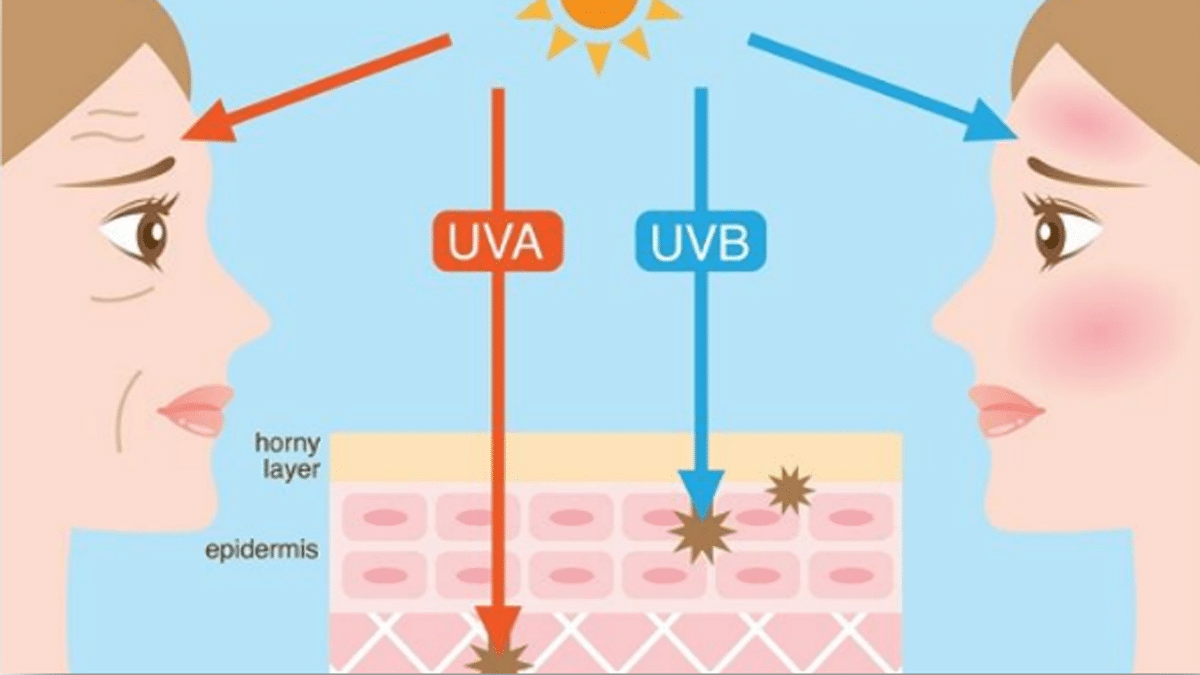
Summer is synonymous with sunshine, vacations, and the outdoors. Exposure to sunlight is important for our bodies: it promotes vitamin D synthesis, contributes to psychological well-being, and stimulates the skin’s natural pigmentation. However, when exposure is excessive or unprotected, ultraviolet (UV) rays become one of the main factors responsible for premature skin aging.
In recent years, research has shown that the sun does not merely affect the outer layers of the skin, but causes profound changes at the cellular level, directly affecting DNA—and, in particular, the DNA contained in the mitochondria.
Photoaging: Much More Than Just Wrinkles
About 80% of the visible signs of facial aging are not solely due to chronological age, but to chronic exposure to UV rays. This process is known as photoaging.
Clinical manifestations include:
- early wrinkles;
- loss of elasticity;
- pigment spots;
- uneven skin tone;
- thinner, less firm skin.
At the root of these changes lies a well-known biological phenomenon: oxidative stress.
Oxidative Stress: When Free Radicals Overwhelm Cellular Defenses
Exposure to UVA and UVB rays increases the production of reactive oxygen species (ROS).
These highly reactive molecules can damage numerous cellular structures:
- cell membranes;
- proteins;
- collagen and elastin;
- Nuclear DNA;
- Mitochondrial DNA.
When ROS production exceeds the capacity of the body’s antioxidant systems to neutralize them, a state of oxidative stress sets in, which accelerates the skin’s aging process.
Why is mitochondrial DNA so vulnerable?
Mitochondria are the cell’s “powerhouses,” producing ATP through oxidative phosphorylation. It is precisely during this process that small amounts of free radicals are physiologically generated.
Mitochondrial DNA (mtDNA) has certain characteristics that make it particularly susceptible to oxidative damage:
- It is located very close to the ROS production sites;
- has less efficient repair systems than nuclear DNA;
- It lacks the protection provided by histones.
As a result, mtDNA accumulates mutations at a faster rate than nuclear DNA, making it one of the first targets of damage caused by sun exposure.
The Common Deletion: The “Mark” Left by the Sun in DNA
Among the most extensively studied genetic variations is the so-called Common Deletion, a 4,977-base-pair deletion in mitochondrial DNA, also known as ΔmtDNA4977.
This mutation accumulates progressively over the course of a person’s life and is particularly prevalent in areas of the skin most exposed to the sun, such as:
- face;
- neck;
- the backs of the hands.
Several studies have shown that the amount of Common Deletion increases in relation to cumulative UV exposure, making it one of the most reliable molecular biomarkers of photoaging.
In other words, while wrinkles and age spots represent the visible damage, the Common Deletion documents the biological damage that the sun has caused inside the cells.
Measuring DNA Damage: From Research to Precision Medicine
In recent years, molecular biology methods have been developed that allow for the quantification of the accumulation of the Common Deletion using quantitative PCR (qPCR) or digital PCR.
These analyses make it possible to assess the level of mitochondrial damage present in a skin sample and represent a significant step forward in precision medicine as applied to dermatology.
Unlike simple clinical observation of the skin, mitochondrial DNA testing makes it possible to measure molecular changes that often precede the appearance of visible signs of aging.
Genetic damage and predisposition: two complementary aspects
It is important to distinguish between two concepts that are often confused.
On the one hand, there is genetic predisposition—that is, the set of DNA variants inherited at birth that influence, for example:
- antioxidant capacity;
- the inflammatory response;
- collagen production;
- sensitivity to UV rays.
On the other hand, there is acquired genetic damage, which accumulates over the course of a person’s life as a result of environmental exposure, lifestyle, and sun exposure.
Assessing both aspects provides a much more comprehensive view of the skin’s biological condition.
From Measurement to Personalized Prevention
The ability to quantify mitochondrial damage opens up new possibilities for preventing skin aging.
Monitoring molecular biomarkers such as the Common Deletion over time allows us to:
- assess the effects of photoexposure;
- assess the effectiveness of sun protection strategies;
- monitor dermatological and dermocosmetic treatments;
- tailor nutritional and lifestyle recommendations based on individual genetic characteristics.
The goal is not only to reduce the appearance of wrinkles, but also to preserve the skin’s biological function by slowing down the cellular processes that lead to its aging.
Conclusions
Today we know that the sun leaves a veritable “molecular signature” in our DNA. Oxidative stress induced by UV rays accelerates the accumulation of mitochondrial DNA alterations, including the Common Deletion, one of the most widely studied biomarkers of photoaging.
The integration of genetic predisposition analysis and molecular damage measurement represents an innovative approach to precision medicine, enabling a shift from a one-size-fits-all approach to prevention to truly personalized strategies based on each individual’s biological characteristics.
Would you like to find out how to assess the health of your skin for personalized prevention?
👉 Learn more about the InGeno|Skin test
Essential Bibliography
- Krishnan KJ, Birch-Machin MA. The incidence of both tandem duplications and the common deletion in mtDNA from three distinct categories of sun-exposed human skin and in fibroblasts cultured for prolonged periods. J Invest Dermatol. 2006;126(2):408-415.
- Birch-Machin MA, Swalwell H. How mitochondria record the effects of UV exposure and oxidative stress using human skin as a model tissue. Mutagenesis. 2010;25(2):101-107.
- Birch-Machin, M.A. Mitochondria and skin disease. Clin Exp Dermatol. 2000;25:141-146.
- Berneburg M, Grether-Beck S, Krutmann J. Photoaging of human skin. Photodermatol Photoimmunol Photomed. 2000;16:239-244.

