
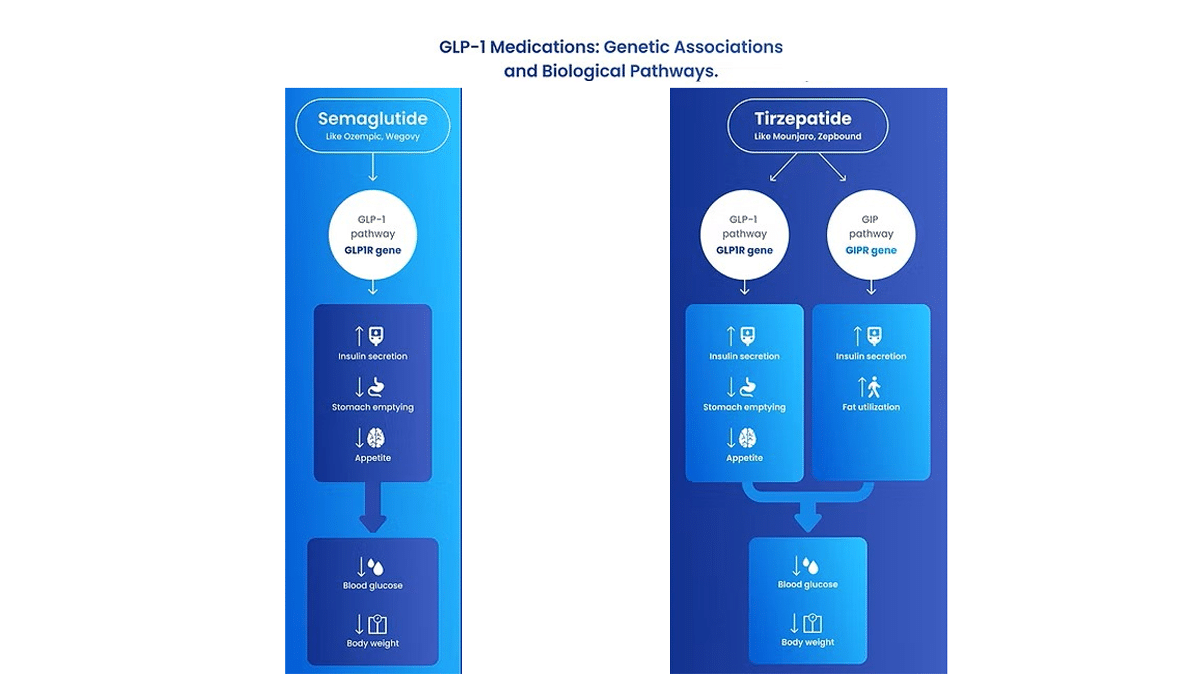
In recent years, GLP-1 receptor agonists such as Ozempic, Wegovy, Mounjaro, and Zepbound have revolutionized the treatment of overweight, obesity, and type 2 diabetes. However, those who use them know full well that results vary from person to person.
Some people lose weight quickly, others see more modest results, some tolerate the treatment well, and others experience nausea, vomiting, or gastrointestinal problems. The question many people ask is simple: why does this happen?
Part of the answer may lie in our DNA.
Why do some people respond better to GLP-1?
GLP-1 medications mimic the action of a natural hormone produced by the intestine, glucagon-like peptide-1, which plays a role in regulating hunger, blood glucose levels, and gastric emptying.
The main agents are:
- by increasing the feeling of fullness
- by reducing appetite
- slowing down digestion
- improving glycemic control
However, the human body does not react in exactly the same way in every individual. In addition to diet, physical activity, age, sex, and metabolic status, an individual’s genetics can also influence the therapeutic response.
The study: more than 27,000 people analyzed
A major study published in 2026 in *Nature* analyzed genetic and clinical data from more than 27,800 users of GLP-1 medications, identifying genetic variants associated with:
- greater weight loss
- lower therapeutic efficacy
- increased risk of nausea and vomiting
This is one of the first major pharmacogenetics studies focusing on GLP-1.
The genes involved: GLP1R and GIPR
- GLP1R gene
The GLP1R gene encodes the receptor targeted by drugs such as semaglutide. Certain genetic variants of this gene appear to be associated with:
- best weight-loss solution
- greater average weight loss
- a higher likelihood of nausea in some individuals
In practice, the receptor may be more or less “sensitive” to the drug.
- GIPR Gene
The GIPR gene is of particular interest for dual agonist drugs such as tirzepatide, which act on both the GLP-1 and GIP systems.
Certain genetic variants have been found to be associated with:
- increased risk of gastrointestinal side effects
- differing tolerance to treatment
What does that mean in practice?
Today, in most cases, GLP-1 prescriptions follow standard clinical criteria:
- BMI
- presence of diabetes
- insulin resistance
- metabolic syndrome
- cardiovascular comorbidities
But in the future, we may have more precise medicine, in which genetic testing helps us understand:
Before starting treatment:
- high response rate
- risk of side effects
- selection of the most appropriate medication
- Realistic Weight Loss Expectations
- dose adjustment
This approach is part of personalized medicine.
The Role of InGeno Genetic Testing
In the world of metabolism and body weight, DNA does not determine one’s fate, but it can provide very useful information.
Through targeted genetic testing, it is possible to identify variants associated with:
- tendency to gain weight
- Emotional Hunger and Satiety
- carbohydrate and lipid metabolism
- response to physical activity
- insulin sensitivity
- metabolic inflammation
- potential response to future treatment strategies
The goal is not to “predict everything,” but to better tailor clinical and nutritional decisions.
GLP-1s aren’t magic
Even with the best possible genetics, no medication can replace:
- proper nutrition
- physical exercise
- adequate sleep
- stress management
- continuity of care
Genetics, however, can help reduce the traditional “trial-and-error” approach.
Conclusion
New studies confirm that not everyone responds to GLP-1 medications in the same way, and part of the explanation lies in our DNA.
In the coming years, it will become increasingly likely to integrate:
clinical evaluation + metabolic tests + lifestyle + genetics
to choose the most effective and sustainable weight-loss strategy.
Do you want to better understand your metabolism?
With InGeno genetic testing, you can get personalized information about your metabolic profile, your predisposition to body weight, and the nutritional strategies that are best suited for you.
Are you interested in learning how your DNA affects your health?

