
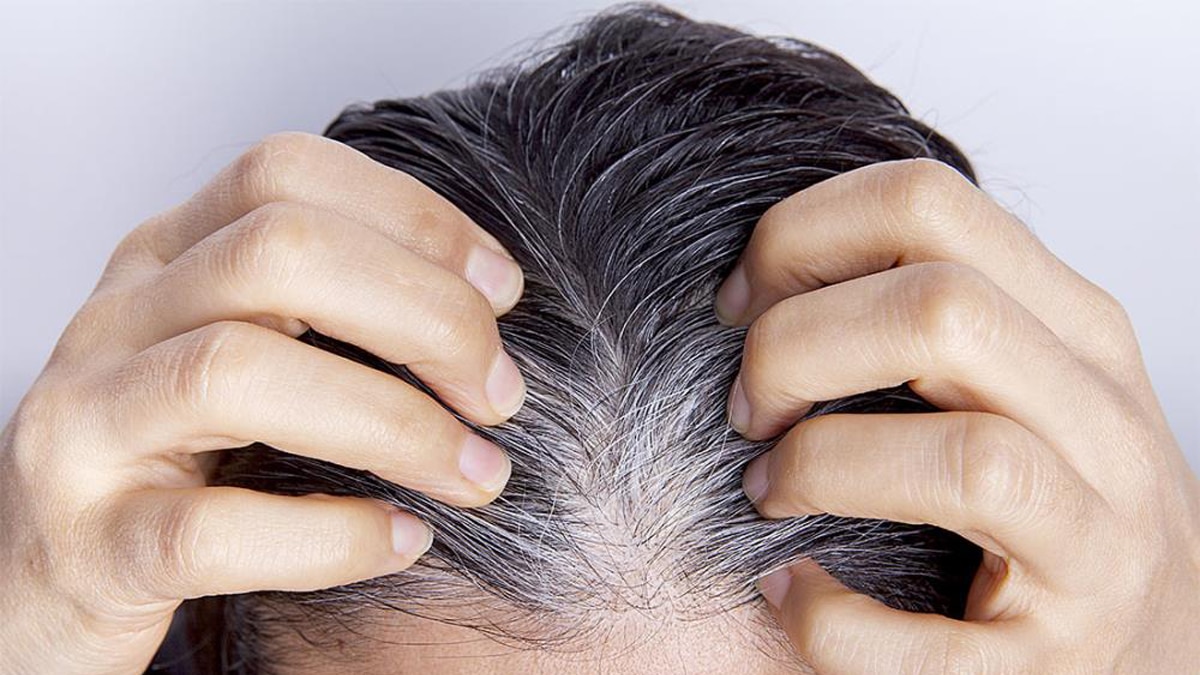
Can gray hair turn dark again? What does science say about repigmentation?
Can gray hair really repigment and turn dark again? In some cases, yes: scientific research has documented rare instances of spontaneous repigmentation of previously gray or white hair. This does not mean, however, that there is currently a proven treatment capable of permanently restoring gray hair to its original dark color.
An interesting clinical observation published recently describes a phenomenon that could help formulate new hypotheses about the biological mechanisms involved in follicular pigmentation.
Electrolysis and repigmentation: an interesting observation, but one that has yet to be proven
On August 20, 2026, Julia Wallis, an electrolysis specialist with over 35 years of experience, published an article titled “When White Hair Regains Its Color” in *The Science and Experience of Energy *.
Wallis reports that, following electrolysis treatments on white facial hair, he observed the appearance of pigmentation in hairs from follicles adjacent to the treated ones. In some cases, the new hair shafts appeared two-toned: white in the older portion and pigmented in the part closest to the root.
It is important to note that this is a clinical observation published in a popular science article, not a peer-reviewed experimental study.
The proposed hypothesis is that the microlesion caused by electrolysis and the subsequent tissue repair response may temporarily alter the microenvironment of adjacent follicles through cellular, inflammatory, vascular, and metabolic signals, creating conditions that are potentially conducive to melanogenesis.
The author herself points out, however, that there is no evidence to show that electrolysis can directly restore pigmentation.
This observation is therefore particularly interesting because it raises a biological question: Can modifying the microenvironment of a follicle, under certain conditions, reactivate residual pigment-producing capacity?
Is it possible to restore color to gray hair?
There is scientific evidence suggesting that, at least in some follicles, the loss of pigmentation is not necessarily irreversible.
In 2021, Rosenberg and colleagues developed a method to quantitatively analyze the distribution of melanin along individual human hairs. The study identified hairs in which a phase of depigmentation was followed by the reappearance of pigment in the most recent portion of the hair shaft.
In other words, some follicles that had previously been responsible for producing a white hair had subsequently resumed producing a pigmented hair.
However, this phenomenon appears to be rare. The study included only 14 participants, and the authors themselves point out that the repigmentation events involved isolated follicles and that their actual frequency in the general population is unknown.
In some individuals, temporal associations have also been observed between changes in pigmentation and periods of increased or decreased psychological stress. This is a suggestive finding, but it is not sufficient to demonstrate a direct causal relationship between stress reduction and the return of hair color.
Reference
Rosenberg AM, Rausser S, Ren J, et al. Quantitative mapping of human hair graying and reversal in relation to life stress. eLife. 2021;10:e67437. doi:10.7554/eLife.67437.
Why Does Hair Turn Gray? The Role of Melanocyte Stem Cells
One of the most interesting mechanisms involves melanocyte stem cells (McSCs), stem cells found in the hair follicle from which the melanin-producing melanocytes originate.
A study published in *Nature* in 2023 by Sun and colleagues showed that these cells are much more dynamic than previously thought.
During the normal follicular cycle, McSCs can migrate between different regions of the follicle and reversibly transition through various stages of differentiation.
As we age, however, some of these cells may become “trapped” in regions of the follicular niche that prevent them from properly receiving the signals necessary to contribute to the production of mature melanocytes.
This finding suggested a new biological model of graying: in some follicles, the problem may not depend solely on the complete disappearance of pigment stem cells, but also on the loss of their proper dynamics within the niche.
Reference
Sun Q, Lee W, Hu H, et al. Dedifferentiation maintains melanocyte stem cells in a dynamic niche. Nature. 2023;616:774–782. doi:10.1038/s41586-023-05960-6.
However, it is important to note a fundamental limitation: these experiments were conducted primarily in mouse models. We cannot, therefore, conclude that McSCs in human gray hair are simply “dormant” and easily reactivated.
Mitochondria, Metabolism, and Hair Pigmentation
Cellular metabolism and mitochondrial function may also play a role in the biology of pigmentation.
In the study by Rosenberg et al., proteomic analysis of white hair revealed differences in proteins associated with energy metabolism, mitochondria, and antioxidant systems compared to pigmented hair.
More generally, Picard and Shirihai have described mitochondria not simply as organelles responsible for ATP production, but as dynamic systems capable of integrating metabolic and environmental information and generating signals that influence cellular stress, adaptation, and interorganelle communication.
This view makes a link between the follicle’s metabolic state and pigment production biologically plausible, but it does not prove that stimulating the mitochondria or locally altering metabolism can restore color to gray hair.
Reference
Picard M, Shirihai OS. Mitochondrial signal transduction. Cell Metabolism. 2022;34(11):1620–1653. doi:10.1016/j.cmet.2022.10.008.
So, can gray hair turn dark again?
The available evidence allows us to distinguish three levels.
Supported by evidence: spontaneous repigmentation of individual human hairs can occur, although it appears to be rare. The follicular niche and melanocyte stem cells play a central role in maintaining pigmentation.
Biologically plausible but yet to be proven: changes in the follicular microenvironment, metabolism, or cellular signaling could influence melanogenesis when residual pigment-producing capacity is still present in the follicle.
Unproven: Electrolysis, microneedling, or other forms of local microstimulation are capable of producing stable and reproducible repigmentation of gray hair.
The most scientifically interesting question, then, might not simply be “How can we make gray hair dark again?”, but rather:
Which follicles retain a residual ability to produce melanin, and what biological signals might make it possible to reactivate this ability?
Understanding why some follicles appear to retain this plasticity while others lose it could open up new avenues in the studyof hair aging, melanocyte stem cells, and regenerative biology.
For now, however, it is essential to distinguish between biological plausibility and proof of clinical efficacy.

