
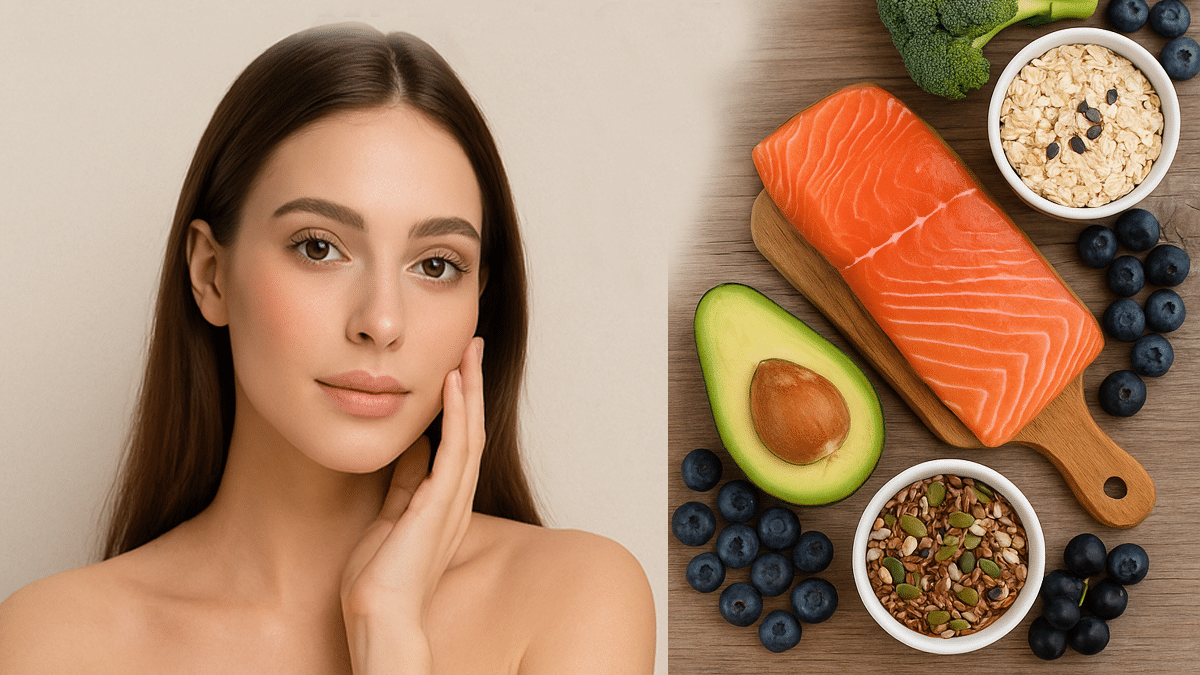
When we think about skin and hair care, we often focus on cosmetics, shampoos, or supplements. However, outer beauty comes first and foremost from within. Nutrition plays a key role in maintaining the health and vitality of our skin and hair, and recent scientific discoveries confirm a profound interaction between what we eat, our gut microbiota, and skin health.
🧬 The Gut-Skin Axis: The New Frontier in Dermatology
The gut microbiota (GM) regulates many systemic functions, including inflammation and the immune response. When this balance is disrupted—for example, due to an unbalanced diet—it is referred to as dysbiosis, which can also affect the skin microbiota (SM). The result? Conditions such as acne, alopecia, and atopic dermatitis may worsen or develop.
🥗 Key Nutrients for Beauty
– Protein: essential for the production of keratin, the main protein in skin and hair.
– Omega-3: reduces inflammation and helps maintain skin hydration.
– Antioxidant vitamins (A, C, E): protect against external aggressors and oxidative stress.
– Zinc, selenium, iron: essential for hair growth and cell regeneration.
– Fiber and polyphenols: promote a healthy gut microbiome, with positive effects on the skin as well.
🚫 What should you avoid?
Diets high in the glycemic index, simple sugars, saturated fats, and excessive dairy are associated with worsening acne and systemic inflammation. An insufficient intake of protein and micronutrients can also contribute to hair loss.
📌 Acne, alopecia, dermatitis: the role of diet
– Acne: linked to hyperinsulinemia, IGF-1, and hormonal imbalances. A low-glycemic-index diet can help.
– Alopecia: associated with deficiencies in protein, iron, zinc, and biotin. Diets rich in specific nutrients can stimulate regrowth.
– Atopic dermatitis: Improvements have been observed in individuals following anti-inflammatory diets rich in fiber and omega-3s.
🥦 Skin-Friendly Diets
– Mediterranean Diet: Clinical evidence shows a reduction in acne and an improvement in hair health.
– Balanced plant-based diet: supports the gut microbiome, reduces inflammation, and provides beneficial phytonutrients. However, it must be carefully balanced to avoid deficiencies.
🧪 Probiotics, Postbiotics, and Nutrigenomics
Modulating the microbiota with probiotics, synbiotics, and postbiotics has shown promising benefits in the treatment of dermatological conditions. A growing body of evidence links these interventions to a reduction in skin inflammation.
📊 Toward Personalization: Genetic Testing and Tailored Diets
Are you interested in learning how your DNA affects your health?
👉 Learn more about our InGeno|Food nutrition DNA test

